- Exhibition
Dub Dub Draw
finished
Venue:art space co-jin
In musical terminology, “Dub” derives from dubbing and refers to a musical form in which the original sound source is processed with echoes and other treatments.
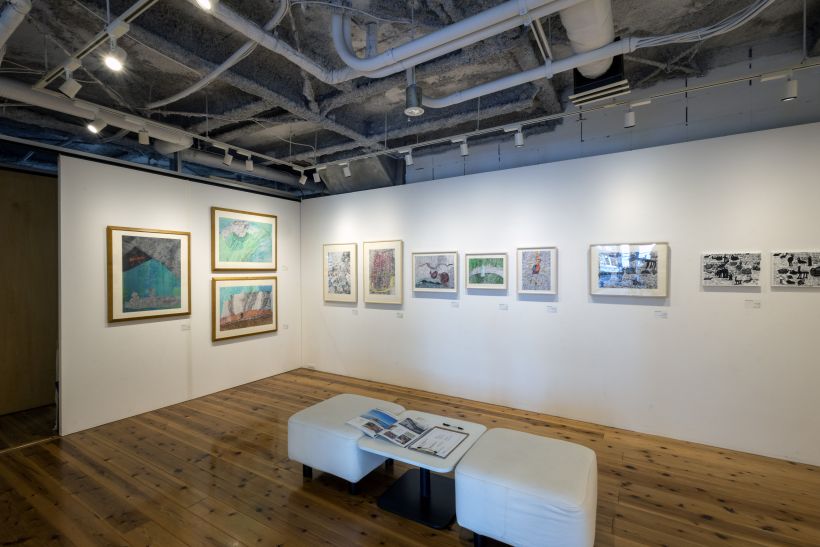
Dub‘ refers to the repetition and layering techniques common to all three artists, and the title ’Dub Dub Draw” is a combination of these and the act of drawing.
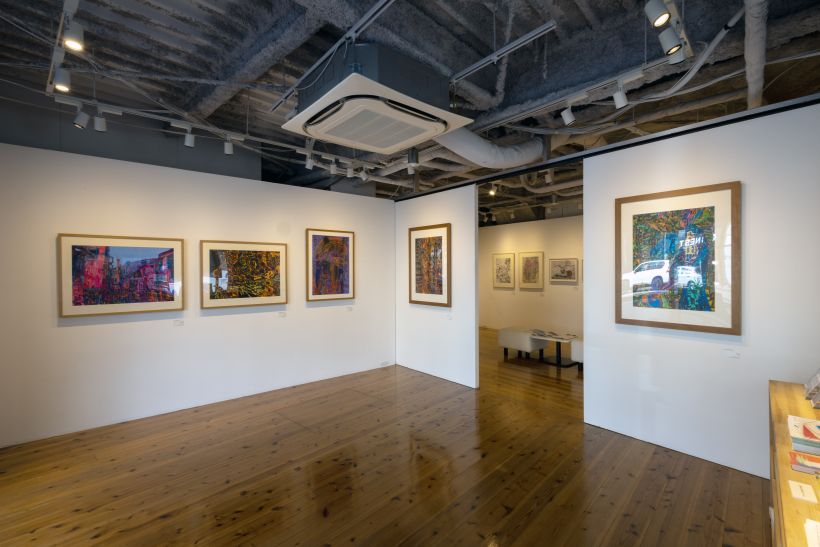
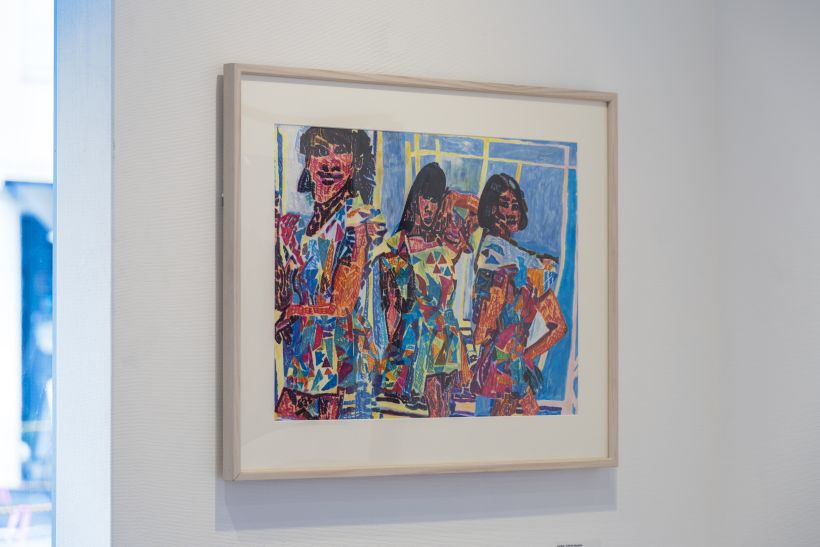
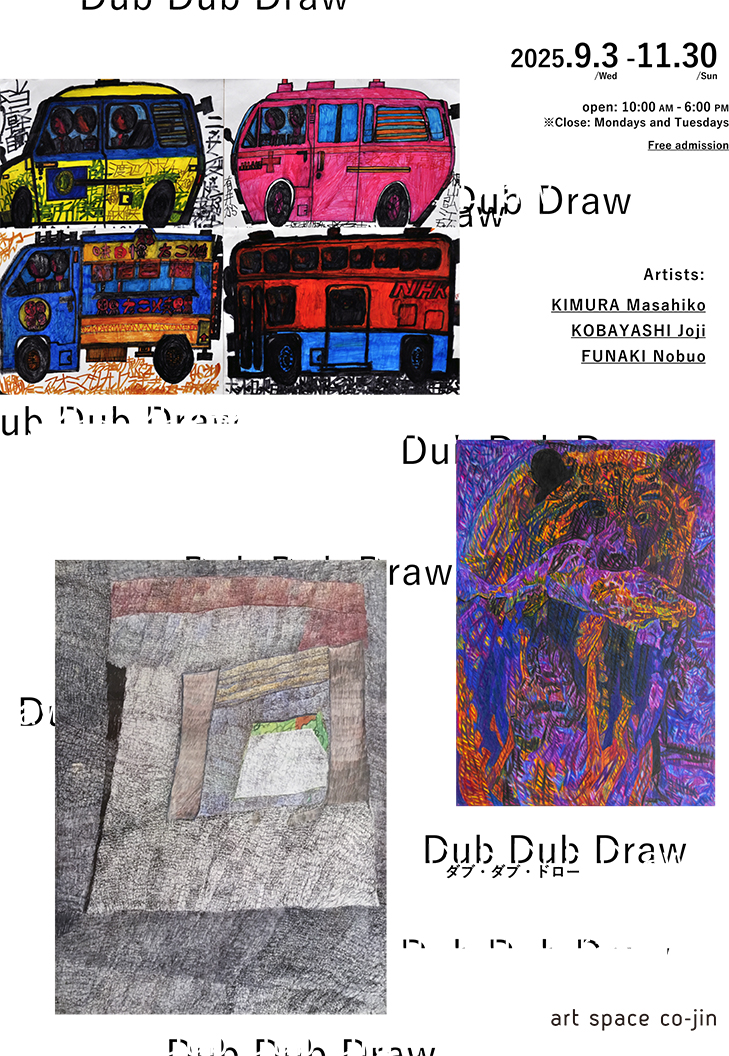
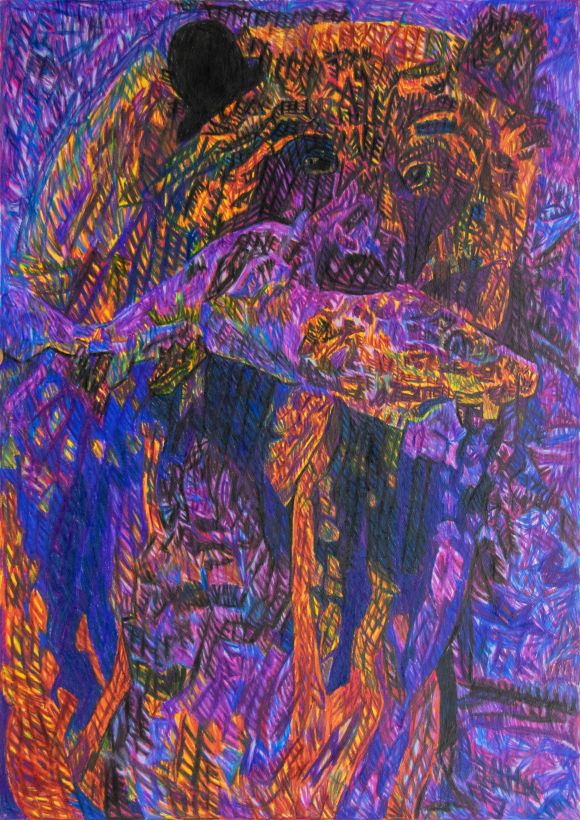
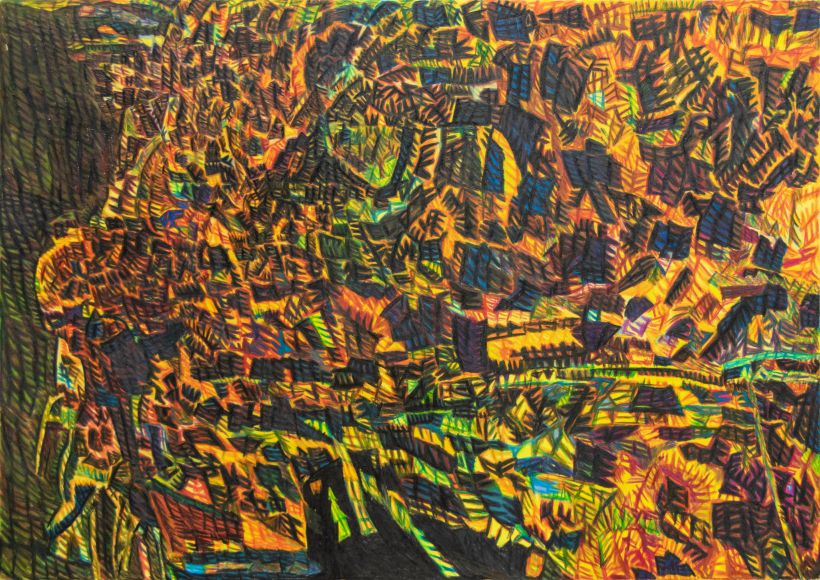
KIMURA’s works, created mainly with coloured pencils and sometimes with such forceful pressure that the paper breaks, have a mysterious allure, with wedge-shaped patterns appearing throughout. The wedge-shaped patterns create a visual mixture by combining several colours, causing the viewer’s gaze to float in one place, and the senses to be renewed again and again. His works are highly acclaimed both at home and abroad, and have been published in textbooks and attracted a great deal of attention.
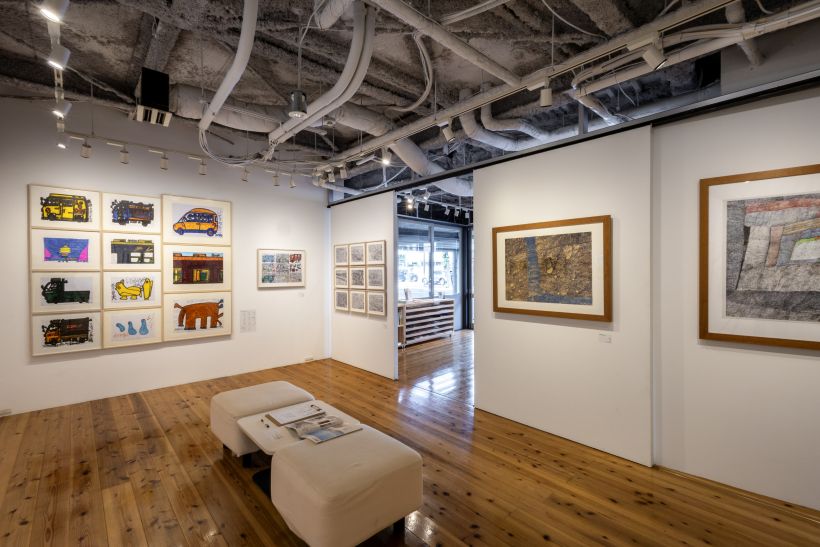
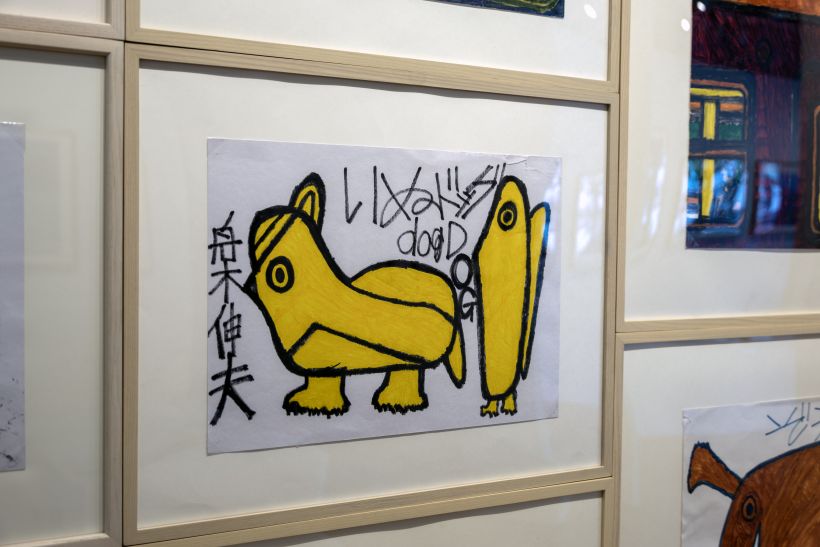
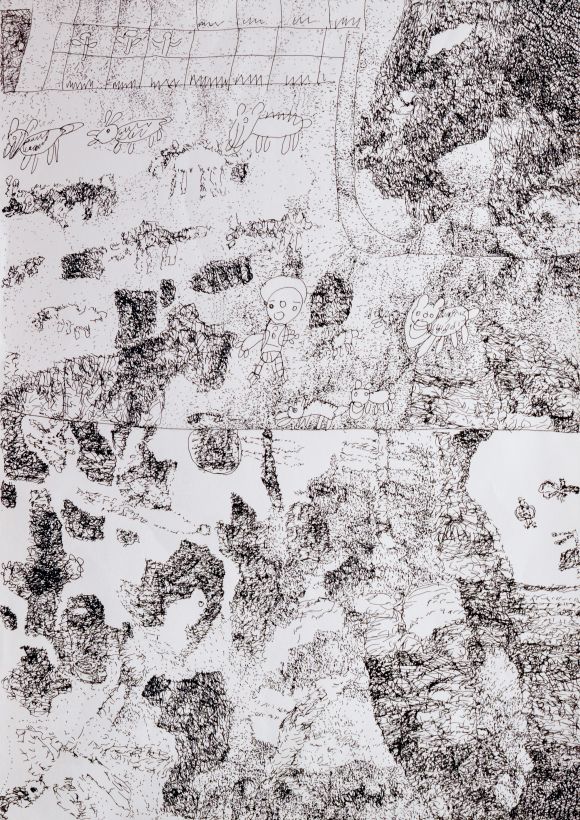
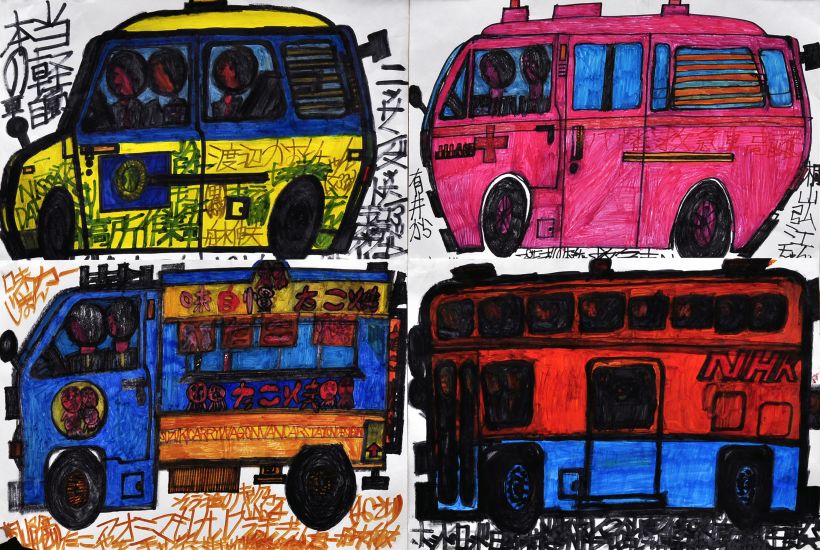
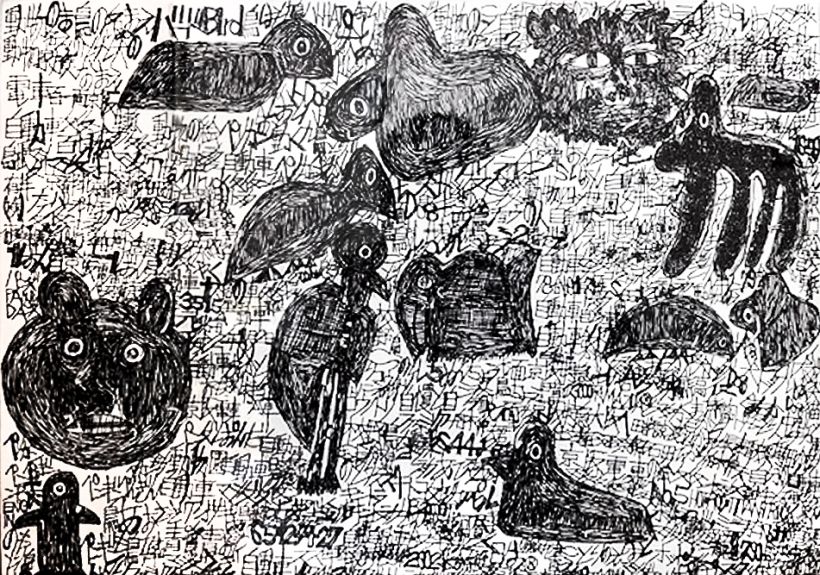
FUNAKI used to colour vehicles and animals with oil-based magic markers and write his own name and the names of motifs around them, but in recent years he has shifted to drawing mainly with letters, making full use of ballpoint pens. He fills the space with reverberations created by repeating numbers and letters within the limited two-dimensional space of paper.
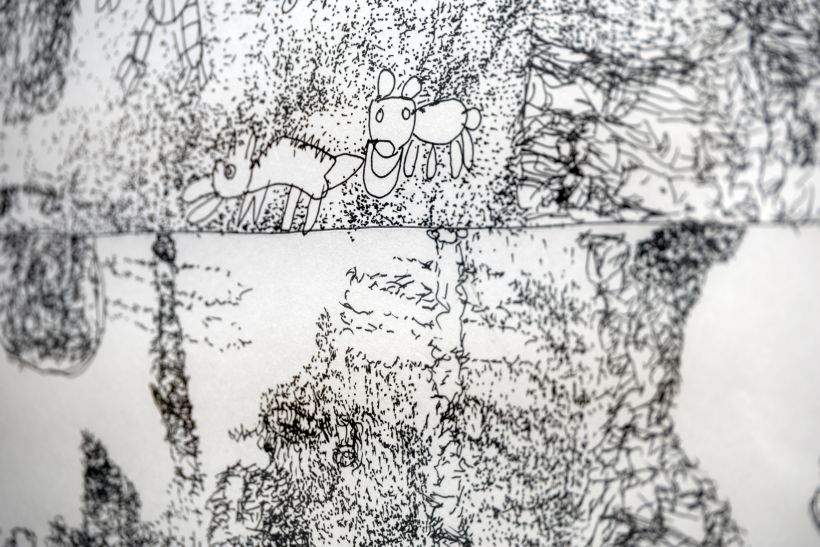
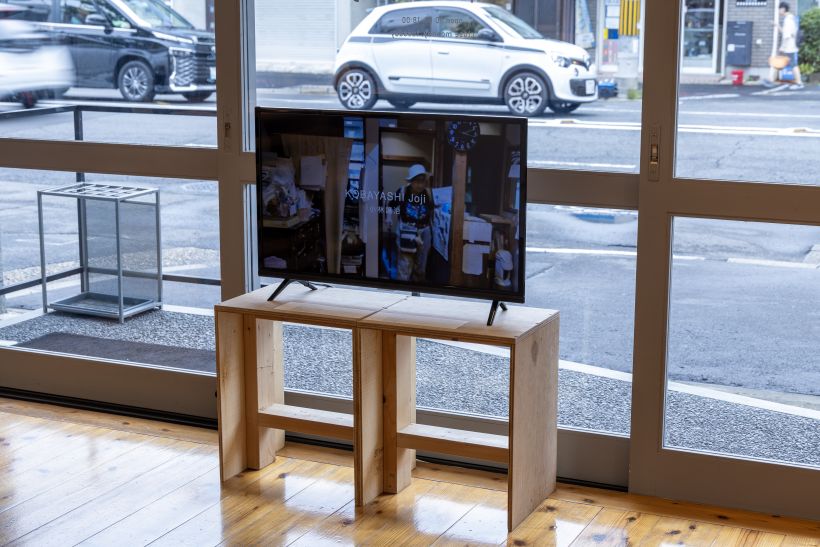
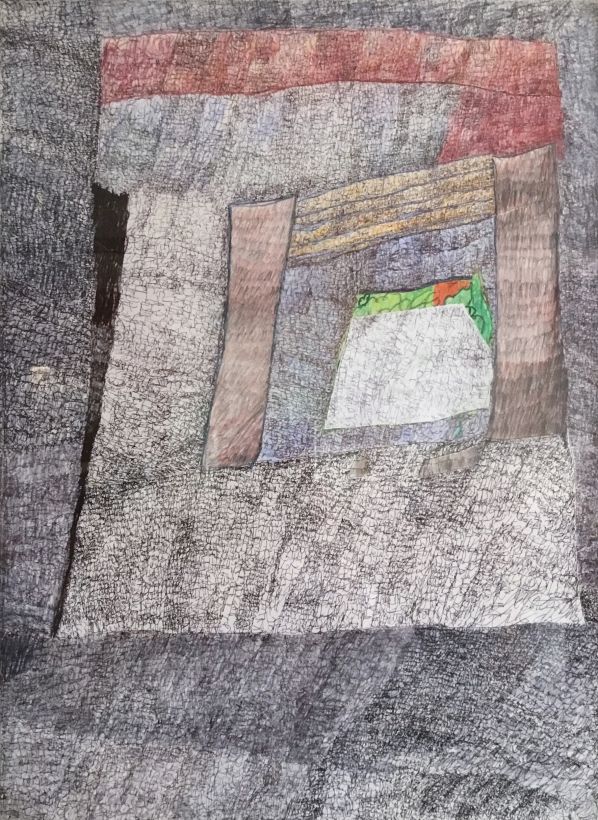
On the other hand, it is KOBAYASHI who speaks of his work as not being an accumulation of some intended form, and composes his screens with his fine lines. While he produces many works with a somewhat simple and generous atmosphere, he sometimes encounters works that seem to amplify a sharp and unfathomable landscape. The fine touch becomes a floating groove that reveals a new view.
Please take this opportunity to enjoy a space that invites fresh surprises and resonance.
Schedule
2025-9-3(wed)–11-30(sun)
Closed on Mondays, Tusedays
10:00-18:00
Venue
art space co-jin
Artist
KIMURA Masahiko
KOBAYASHI Joji
FUNAKI Nobuo
Works
Profile
KIMURA Masahiko
KIMURA began painting in earnest at “Atelier Yoohoo!!,” which was established within the facility in 2008. After selecting photographs and other motifs with the assistance of a support staff member, he begins his artwork using a 150-color set of colored pencils. KIMURA’s works, characterized by deep, rich colors born from a forceful touch that sometimes tears the paper, feature wedge-shaped patterns throughout. These patterns are affectionately called “cunei-cunei,” derived from the Latin word “cuneiform,” which means “wedge-shaped writing.” The combination of multiple colors in these patterns creates visual mixing, making the viewer perceive many times more colors than are actually used. His works have garnered high acclaim both domestically and internationally. He exhibited at the KOMOREBI exhibition (2017, France / Centre National des Arts “Lieu Unique”) and is set to be featured in art textbooks in 2025, attracting even more attention.
KOBAYASHI Joji
KOBAYASHI’s first experience with “Shinmei-Juku,” a welfare facility in Kyoto, was in 1975, and he has been a member from its founding. Since joining the painting class that began in 1980, painting has remained an integral part of his life to this day. He often paints scenes of nature, using color to express the soft spring air at the end of winter and the summer hues of the rainy season—a sense of the seasons that seems to arrive a little early. In recent years, he has incorporated a technique of filling the canvas with fine, mosaic-like (spiderweb-like) lines drawn with a ballpoint pen. “These intricate patterns emerge spontaneously”—they are neither letters nor depictions of anything specific. He maintains a unique style, using a variety of lines and drawing as his mood takes him. His rich sensitivity, which detects the subtle signs and atmospheres of daily life, is evident not only in his paintings but also in his haiku.
FUNAKI Nobuo
FUNAKI decides on his motifs several days in advance and spends his days intently working with his pen.
Until around 2017, his work featured bold outlines and a free-spirited style that made full use of the characteristics of oil-based markers. His canvases often included text such as his own name, car models, and manufacturers. After relocating his base a few years ago, he began using ballpoint pens more frequently; their fine lines increased the proportion of text, and through repetition, they sometimes completely cover the blank spaces. The text depicted sometimes refers to the image itself, while at other times it features the names of celebrities. There are also phrases like “This is a picture of a bird,” and one of the works’ charms is that the comma is rendered as an R symbol (indicating a registered trademark). There exists a unique process in which the text, having fulfilled its role as supplementary information to the image, transforms into the central subject of the artwork.
Organize
art space co-jin
Kyoto Culture and Art Promotion Organization for People with Disabilities
Cooperation
Kyoto City Fushimi Gakuen Atelier YooHoo!!
Social Welfare Corpioration " Shinmei-juku " jusai gallery
Social Welfare Corpioration Yotsuba Welfare Assosciation
Shimane Prefecture Cultural and Artistic Activities Support Center for People with Disabilities Art Base Shimaneiro
Records of Exhibition